
Both popular and traditional astrology incline toward associating Virgo with work — which is a unique symmetry in popular and traditional narrative. There is usually more discord between the two strains of interpretation when astrological archetype is concerned. The usual discord between pop and folk interpretation isn’t an impossible one to reconcile; it just requires a learned gut to stomach the archetype in its potencies and a trained eye to catch the archetype in its abstractions.
Let’s take Gemini, for example. In popular astrology, Gemini is communicative; chatty, even. This ease of communication — borderline eagerness to communicate or engage — in nearly all situations lends many to perceiving Gemini as unfaithful, two-faced. In more esoteric astrology, Gemini is communicative, yes; but it stems from the innate curiosity of Gemini. Gemini is an air element in astrology, so it behaves similar to air in real-time: inevitably coming into contact with things, and thus being informed by all things in comes in contact with. Think: wind whistling, caused by interaction of air and material; or the way smoke expands outward when coming into contact with a surface. Gemini is also ruled by Mercury, the messenger of the gods — so there are many mental and verbal journeys or commutes (notice the root for communicate and commute are the same yet the words denote different things) — and thus opportunities for contact and communication along the ‘journey’ between ‘gods’.
In this sense, the language popular astrology gives to Gemini isn’t an inaccurate one; nor is the more traditional interpretation of Gemini a more accurate one. Both are simply improvements upon each other. Accuracy in interpretation can only be measured in how much the entity embodying the interpretation pivoted the native toward their respective enlightenment and self-actualization. Regardless, this discord is seen with many other signs — and not all seekers are readily equipped with the esoteric, intellectual, and somatic tools to reconcile the discordance.
With Virgo, though, there is minimal rift to mend: Virgos love their work, and love their work perfect, and somehow we all know it. Virgo is the virgin, the immaculate, the feminine before given form — or being informed by — the masculine. Though virginhood implies a youth or certain naivete, the virgin quality of Virgo doesn’t render the native ignorant or dull. Virgo’s octave of virginity is one comprised of genius and executed as genius. If the formless is feminine and the formed is masculine, if the feminine is unmanifest and the masculine is manifest, and both the feminine and the masculine may operate independently before interacting with each other, then the feminine — the formless, amorphous darkness of virginity — guarantees this genius:
The ability of Virgo to receive and envelop information; to arrange its infinite nothingness into a finite, observable something; and to orient its existence to the foreign and unfamiliar is the genius, the magic of this archetype. The magic is sourced in the Virgo openness to experience, form, and be informed. The accommodation a Virgo gives to experience — the yielding unto information, form, and, on a deeper level, masculinity — is what sets Virgo apart. The innate duty of Virgo is not to honor this intelligence, but to instead honor the form that triggered its innate intelligence out of its latency.
We see this archetype of the open expressed through Mary, the mother of Jesus of Bethlehem. Bethlehem translates to ‘house of bread’ — and Virgo is symbolized by the Virgin separating the wheat from the chaff.

The conception of Jesus occurred when it was revealed to Mary that she would bear a son. Instead of protesting and rejecting the information, Mary regarded it as truth and accepted it as blessing. This is what planted the seed in her flesh: she accepted the revelation and stored it in her conscious and subconscious minds, her nervous system, her tissue cells. This was her opening herself up to be informed by the God-given information. She exercised her otherwise latent intelligence by giving form to what she was informed of. The form which emerged from this integration — Mary’s integration of masculine and feminine principle — is Jesus Christ, our Lord, our Savior; the one true entity that once saved, does save, and will save us from from the evil of this world. The evil of this world is simply the fullest gestation of any and all selfish thought, feeling, and action. The evil of this world does make itself known in the world while we are living in it, but the evil has yet to reach and remain at its fullest gestation. If Christ is love and we are to welcome Christ into our hearts, then love is what combats this evil. Love prevents its ripening.

Mary was the virgin, Virgo is the virgin. Virgo, in its fullest and highest expression, is the potentiality of the virgin. It is the yearning for information, for form — and the intelligence that interprets that information into form. It is the most primal duty of the Virgo, and therefore localized in the root chakra. The gnosis of that urge, though, is located in the crown chakra. Therefore, Virgo’s subtlest urge is its highest calling.
Of course, when this archetype descends from the ether and incarnates in the flesh, such as when Virgo was expressed through Mary, the integration of worlds isn’t always so perfect.
The Self in Jungian psychology is symbolized by ☉. The sun, known as the self in astrology, is also symbolized by ☉. In the Jungian paradigm, the Self accepting the archetype will always display its qualities in relation to the self and its characteristics, habits, preferences. Likewise in astrology, the planet or luminary may be situated in any of the signs in the chart, but the planet or luminaries expression will always be colored by the other aspects in the chart.


Not only is the translation of archetype/self, sun/sign, and Virgo/native not always clear, the translation is also hidden in a cosm of other translations. The elements that create this cosm may be localized in the same time/space, but the expression of the elements is occurring on differing timelines and in alternate spaces. Until the Virgo native becomes conscious of this chaos and simultaneous concision; mess and parallel order, they will never be able to execute their primordial geniuses in their highest degrees.
Thus, all the work/Virgo associations we see are attempts and actualizing that genius; attempts at employing the same high magic Mary performed. This is true for the obvious associations — workaholic, determined, disciplined — as well as the more shrouded associations: creative, neurotic, perfectionist, controlling.
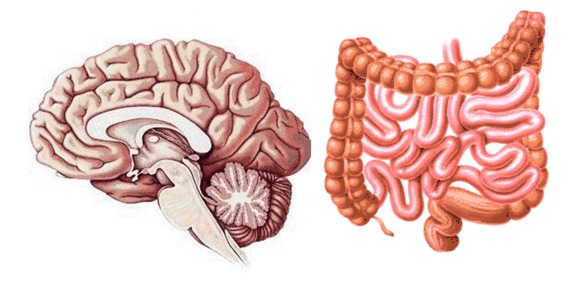
The perfectionism comes in when the native is concerned with how well their conjured form matches the given information. This rings true with the controlling narrative as well — all elements must be manipulated and manipulated to perfection in order for the highest form to emerge. The creativity comes in when the form is perceived in the minds of others to originate from ‘thin air’ — or the dark, formless and feminine arena all things descend from. The neuroses originates from the gnosis that Virgo rules the gut and, in some schools, the nervous system.
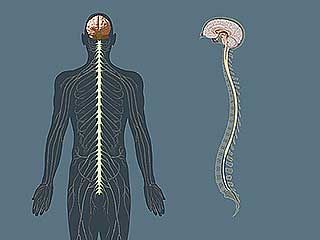
The gut is often referred to as the second mind. This is not far from the truth. The gut houses neurons and triages stimuli the way the mind would (digestion, the processing of food and subsequent sorting of nutriment from waste, is similar in process to perception and the narrative created subsequent to the perceiving). In addition to this, the gut is also similar in form to the brain.
Virgo season is our annual chance to improve our utility over the genius Virgo bestows. We can best engage with this process by employing Virgo tactic: ritual + habit. Ritual is simply a preparation for; the act of making oneself ready to be reoriented, to receive new form, or to be informed. Habit encourages the repetition of ritual, so much so that the practitioner’s desired experience becomes nature. Perfection, or perhaps a precise observance of the decrees set forth by whatever our locus is oriented toward, be it Christ or otherwise, is what Virgo aims for. Work is how Virgo pivots itself into the vicinity of this perfection. Virgo offers us invitations to work intentionally, get precise, and become perfect.
 subatomic thoughts